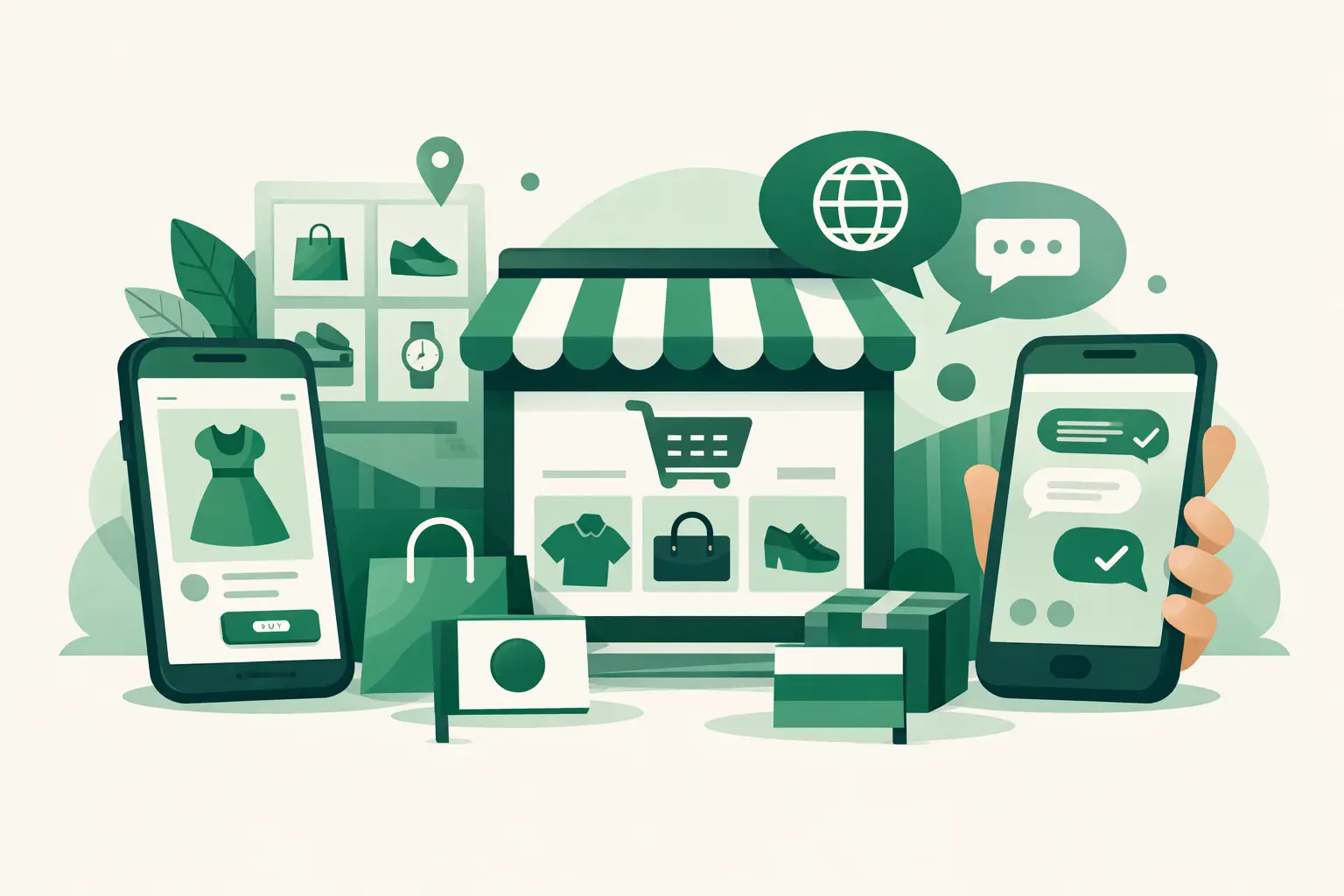
How to Build a Multi Language Online Store
July 11, 2026
An Instagram post can reach people far beyond the language you speak every day. That is good for visibility, but it can create friction at the moment someone wants to buy. A multi language online store gives shoppers a clear path from your post to product details, choices, and checkout in words they understand.
For a small business, this is not about translating every sentence on the internet. It is about removing the doubts that stop a real customer from placing an order: What is this product? Which size should I choose? How long will it take? What do I do next?
Start with the language your buyers actually use
Do not add languages because they sound like a growth strategy. Add them because you are already seeing a pattern in your messages, comments, or customer questions. Maybe customers regularly ask for details in Spanish. Maybe your content attracts a community that uses Arabic, French, or another language at home.
Start with your main store language and one additional language. This keeps the work manageable and helps you learn what customers need before you build out more pages.
Look at the messages that take the most time to answer. If people repeatedly ask about delivery, product ingredients, sizing, colors, or how to order, those are the first parts of your storefront that need clear translation. A shopper should not have to send a DM just to understand the basics.
Language and location are not always the same thing. Two customers may live in the same city but prefer different languages. Give people a simple way to choose, rather than guessing based on where they are browsing from.
What a multi language online store needs first
You do not need a huge website to serve customers in more than one language. You do need consistency. The experience should feel clear whether someone arrives from an Instagram Story, a Reel, a bio link, or a shared product page.
Translate the pages that help someone decide
Your homepage matters, but product pages usually do more of the selling. Translate product names only when the translated name is familiar to your audience. Keep brand names, shade names, and product codes consistent where that helps customers recognize what they saw on Instagram.
The details below deserve extra attention because they directly affect whether a shopper feels ready to order:
- Product descriptions, including what is included and who the item is for
- Sizes, variants, colors, ingredients, materials, or service options
- Prices, delivery areas, timing, and any order requirements
- Your return or exchange policy and common customer questions
- Checkout instructions and the message a customer sees after submitting an order
A short, accurate description is better than a long translation that sounds strange. If your product is handmade, say that plainly. If an item is made to order, make the timeframe easy to spot. Customers do not need marketing language. They need enough information to make a confident choice.
Keep product choices easy to recognize
Variants can become confusing when language changes. A dress offered in small, medium, and large should not use one label in your Instagram caption, another on your storefront, and a third in your order confirmation.
Use familiar words and keep the structure the same across languages. If you use a size chart, make sure the measurements are understandable to the people you sell to. If a color name is part of your product identity, show the color visually as well as in text. Photos reduce confusion when words vary from one language to another.
Do not forget the post-order message
The order is placed on your storefront, then you may continue the conversation on WhatsApp to confirm details and keep the customer updated. That follow-up needs to match the language the shopper used.
Prepare a few short message templates in each language you support. You may need one to confirm the order, one to request missing information, one to share delivery updates, and one to thank the customer after purchase. Keep them warm and direct. A customer who understood the storefront should not suddenly receive a confusing confirmation message.
Translation is not just swapping words
A literal translation can create more problems than it solves. Some phrases that feel natural in English sound stiff, vague, or overly formal in another language. Product terms can also mean different things in different places.
For example, a beauty seller may need to clarify whether a product is a lip gloss, lip oil, or lip treatment rather than relying on one broad translated term. A food seller may need to explain portions, allergens, storage, and pickup instructions in the way local customers expect. A fashion seller may need to use measurements instead of assuming a sizing label means the same thing to everyone.
Read your translated copy as a customer would. Can someone quickly tell what they are buying, what they need to select, and what happens after they order? If not, simplify it.
Machine translation can be useful for a first draft, especially when you are building a small catalog. But ask a fluent speaker to review customer-facing text before publishing when you can. This is especially important for ingredients, safety instructions, policies, and anything involving money or delivery.
Build for mobile, not for perfect paperwork
Most people coming from Instagram will open your store on a phone. That changes what good multilingual design looks like. A language option should be easy to find without covering the product photos or forcing customers through several screens.
Keep important information close to the action. Put the size guide near size choices. Put delivery details where shoppers are deciding whether to order. Make buttons short enough to fit comfortably in each language. Some translated phrases take more space than English, so check every page on a small screen.
Also, avoid putting critical details inside images. An image with English-only text may look polished, but it cannot adapt when someone switches languages. Use text on the product page for your key information, and treat image text as support rather than the only explanation.
Choose your first language pair with care
The best first language is usually the one that helps your current buyers, not the one with the biggest possible audience. Check which language appears in comments, DMs, saved replies, and questions before ordering. You can also ask your followers directly which language would make shopping easier.
If your audience uses more than one language in the same conversation, keep the storefront organized around clarity. You might use one main language for navigation and offer key product details in a second language. Or you may create complete versions for both languages if you have the time to maintain them well.
It depends on the size of your catalog and how often it changes. A five-product beauty collection is easier to maintain in two languages than a store with hundreds of fast-changing items. Do not publish translations you cannot keep current. An outdated product description can hurt trust faster than no translation at all.
Make updates part of your product routine
Every new product, price change, delivery update, or policy change needs to be checked in every active language. The easiest way to stay organized is to treat translation as one step in publishing a product, not as a project you return to months later.
Keep your original product details in one place before you add them to your storefront. Then create approved versions for each language. This prevents small differences from building up over time, such as a delivery timeframe that says one thing in English and another in Spanish.
Before you share a new Instagram post, open the product page on your phone in each language. Test the path a customer will take: choose a variant, review the order, submit it, and read the confirmation. This quick check catches missing words, broken formatting, and unclear choices while the fix is still easy.
Use customer questions to improve the store
Your inbox is a useful source of language insights. When multiple shoppers ask the same question, do not only answer it one by one. Add the answer to the relevant product page, shipping section, or checkout note in the language they use.
Pay attention to where customers hesitate. If they ask whether a price includes delivery, make that clearer. If they do not understand a variant label, rename it. If they reach WhatsApp after ordering with the same question every time, the storefront needs a better explanation before checkout.
A good multi language online store does not need to say everything in every language. It needs to help each customer understand enough to choose, order, and feel comfortable continuing the conversation. Start with the language your buyers are already asking for, keep the experience mobile-friendly, and improve the words that remove the most friction. That is how your Instagram traffic starts feeling less like a busy inbox and more like a business you can run with confidence.