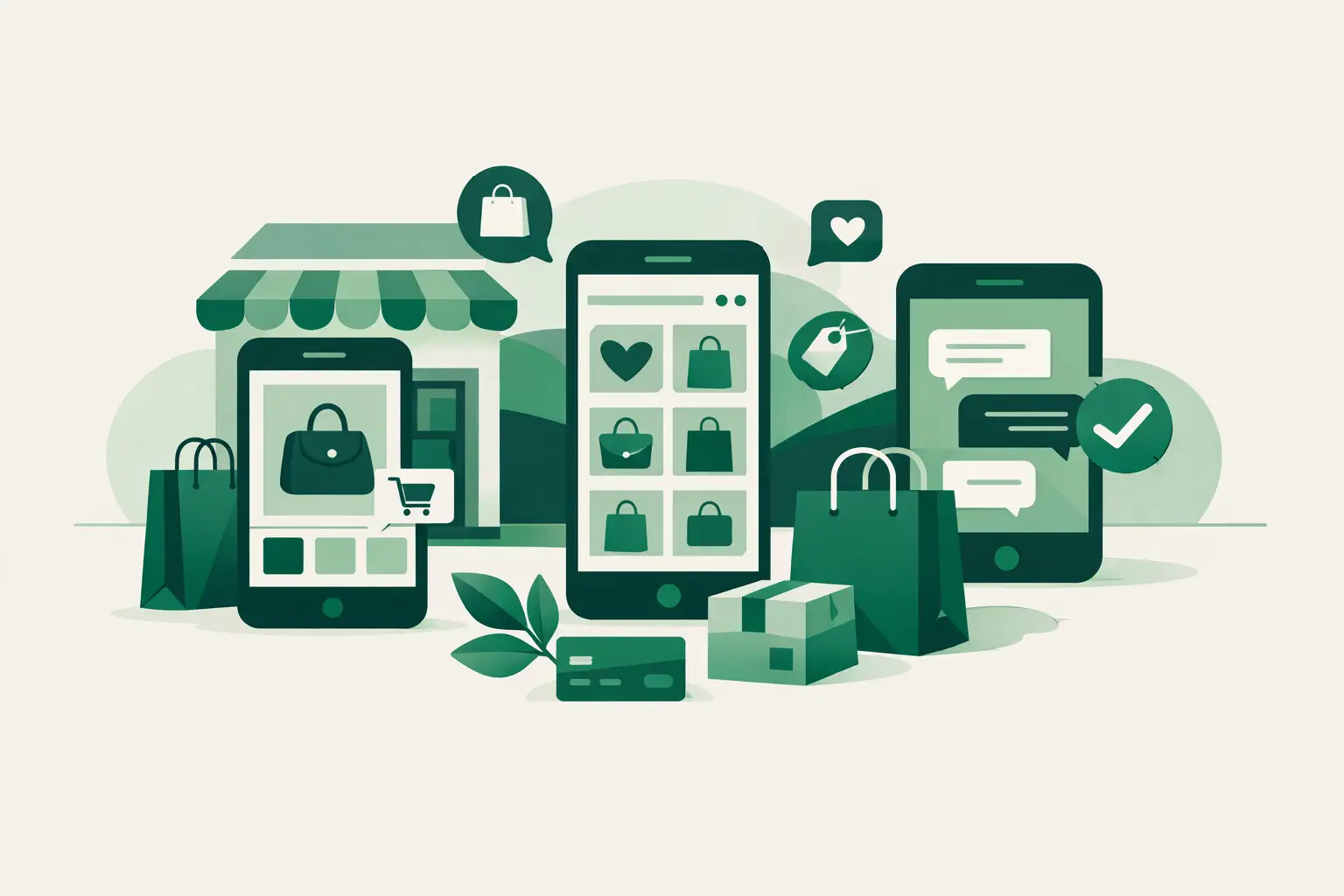
Best Social Commerce Platform for Small Business
July 7, 2026
You can feel when Instagram selling starts to outgrow DMs. A customer asks for the price in one message, size options in another, and shipping details three hours later. Meanwhile, someone else is ready to buy, but your product post is buried under newer content. That is usually the moment a social commerce platform for small business stops feeling optional and starts feeling necessary.
If you sell through Instagram, you do not need a bloated online store with a long setup process and desktop-only admin tools. You need something that fits how you already work - posting, chatting, sharing links, and closing orders from your phone. The right setup should make your business look more organized without forcing you to rebuild everything from scratch.
What a social commerce platform for small business should actually do
A lot of tools promise to help you sell online, but small social sellers usually need something more specific. You are not trying to manage a massive catalog across a dozen channels. You are trying to turn attention into orders before interest fades.
That means your storefront needs to do a few simple things well. It should display products clearly, let customers browse without asking basic questions in chat, and make ordering feel straightforward. It should also support the way social buyers behave. People often discover you on Instagram, check a few items quickly, then decide whether to order based on how easy the next step feels.
If that next step is "send me a DM and wait," you lose people. Not always, but often enough to matter.
A useful platform gives your customers a proper place to shop while keeping communication personal. That balance matters. You want structure, but you do not want to sound like a faceless store.
Why Instagram sellers hit a ceiling with manual selling
In the beginning, informal selling works. You post a product, someone replies, you confirm the details, and the sale happens. It feels direct and manageable when orders are low.
Then things get messy.
Customers ask the same questions again and again because your feed is not a catalog. You manually explain colors, sizes, availability, delivery timing, and pricing. You scroll through old chats trying to confirm who ordered what. You miss follow-ups because your inbox is crowded. Even when demand is good, the buying experience feels harder than it should.
That friction hurts in two places. Customers feel unsure, and you waste time doing work that should already be handled by your store.
This is why a social commerce platform for small business is less about adding complexity and more about removing repeated effort. Instead of answering every buying question one by one, you give shoppers a place where the answers already exist.
The best setup feels native to social selling
A common mistake is moving from Instagram DMs straight to a traditional ecommerce setup that was built for a different kind of business. Those systems can be useful, but they often expect you to manage your store like a full-scale website operation. That can be overkill if you are a solo seller working from your phone.
Social selling has its own rhythm. A customer finds you through a post, story, reel, or shared link. They want to browse quickly, choose confidently, and move into direct communication without confusion. A platform built for this flow feels lighter, faster, and easier to keep updated.
That is where visual storefronts make a real difference. Instead of turning your Instagram page into a maze of comments and DMs, you give customers a clean product view with names, images, options, and stock details in one place. They can shop without guessing.
For small businesses, that kind of clarity is not just nice to have. It makes you look more trustworthy.
What to look for before you choose
The best platform for your business depends on how you sell, what you sell, and how much manual work you want to keep. Still, a few things matter almost every time.
First, setup should be fast. If getting your store live takes days of technical work, it is probably the wrong fit. You should be able to add products, organize your storefront, and start sharing it without needing a developer.
Second, mobile management matters more than most sellers realize at first. If you are running your business between customer messages, product shoots, and deliveries, you need to update products and check orders from your phone. A desktop-heavy system creates drag.
Third, the order flow should reduce back-and-forth, not create more of it. Customers should place orders through the storefront, then continue the conversation in a familiar channel for confirmation and follow-up. That keeps things clear while still feeling personal.
Fourth, basic visibility into your business helps more than flashy extras. You do not need enterprise reporting. You do need to know what is selling, what needs attention, and how your store is performing.
And finally, the platform should match your current stage. If you are a solo founder or a small team, you want something that works now and still supports growth later. The trick is finding enough structure without paying for complexity you will not use.
A storefront is not just about design
It is easy to think of your storefront as a prettier version of your Instagram feed, but that misses the bigger point. A good storefront changes how customers buy from you.
On social media, products are scattered across posts, captions, highlights, and chat threads. In a storefront, products live in one organized space. Customers can compare items, review options, and make decisions faster. That lowers hesitation.
It also changes how you work behind the scenes. Instead of rebuilding the sale every time someone asks about an item, you guide people into a process that already exists. That means fewer repetitive messages, fewer missed details, and a more professional experience from the first click.
For categories like fashion, beauty, food, electronics, and services, this matters a lot. These are purchases where images, options, timing, and trust all play a role. If customers cannot quickly understand what you offer, they move on.
Where WhatsApp fits into the buying journey
For many small sellers, direct communication still matters. Customers may want to confirm a custom detail, ask a final question, or feel reassured before the order is fulfilled. That does not mean the entire sale should depend on open-ended chat.
A better model is simple: let the storefront handle browsing and order placement, then use WhatsApp for order delivery, confirmation, and customer communication. That keeps the process organized while preserving the personal connection people expect from social-first brands.
This is especially useful when you want to avoid the chaos of collecting product choices manually inside message threads. The customer has already selected what they want before the conversation continues. You are not starting from zero every time.
The small business test: can you run it without help?
This is often the clearest way to judge a platform. If you had to update ten products tonight from your phone, could you do it quickly? If a customer asked for a link to your full collection, could you send it in seconds? If orders picked up this weekend, would the system help you stay organized or make you feel buried?
Small business tools should respect your time. You should not need training sessions or custom development to get value from them. You should be able to set up, share, sell, and adjust as you go.
That is why purpose-built platforms tend to work better for Instagram sellers than broad systems designed for every possible business model. When the product is built around your real workflow, everything feels lighter.
Dukkan is one example of that approach. It is designed for Instagram-based sellers who want a visual storefront, a cleaner ordering experience, and communication that continues naturally on WhatsApp - all without coding or building a traditional ecommerce site.
Choosing the right platform means choosing less friction
The best social commerce platform for small business is not the one with the longest feature list. It is the one that helps you sell faster, stay organized, and look more credible without adding work you do not need.
If your business still fits comfortably inside DMs, you may not need to change much yet. But if you are repeating yourself all day, losing track of orders, or watching interested shoppers disappear before checkout, that is your sign. A simple storefront can do more than tidy up your process. It can give your customers a clearer path to buy.
And when buying feels easy, your business starts to feel bigger than the inbox it came from.